Getting home is an important goal after brain injury. But being able to go home and being prepared to live as independently as possible are not the same thing. Home-based therapy can bring rehabilitation services into a familiar environment. A comprehensive brain injury rehabilitation program offers something fundamentally different: intensive, coordinated treatment that extends beyond individual therapy sessions and into everyday life.
At Centre for Neuro Skills, people practice real-world skills across clinical, residential and community environments. They have opportunities to try things independently, problem-solve, make mistakes and build greater independence with the appropriate level of support. The rehabilitation environment itself becomes part of the recovery process.
The difference between home therapy and comprehensive brain injury rehabilitation is much more than where therapy takes place. Comprehensive rehabilitation provides the intensity, repetition and coordination needed to work on multiple areas of recovery throughout the day. At CNS, an interdisciplinary team works toward shared rehabilitation goals, while skills and strategies introduced in clinical treatment can be practiced and reinforced in residential and community settings. People also have access to specialized rehabilitation technology and equipment available in CNS clinics, allowing clinicians to incorporate tools, such as advanced gait and balance systems, when they are appropriate for a patient’s treatment.
Brain injury rarely affects just one area of a person’s life, and progress in one discipline can directly affect the work happening in another. CNS clinicians share what they are seeing, where a person is progressing and where difficulties remain, allowing treatment to evolve as the person’s needs change. For some people, the level of rehabilitation, supervision and support they need may also exceed what can reasonably be provided at home. CNS offers different levels of care based on those needs, including Residential Inpatient Rehabilitation for people who require more intensive support.
Timing can also be an important consideration when planning the next stage of rehabilitation. Home health services may not begin immediately after discharge, potentially creating a gap at a critical point in recovery. CNS staff are available to provide rehabilitation services soon after discharge, helping people maintain continuity as they transition from acute care.
In a comprehensive program, rehabilitation isn’t limited to what happens during a scheduled appointment. Skills introduced in one setting can be practiced, observed and reinforced throughout the person’s day.
Before a brain injury, most people move through a familiar rhythm every day. They wake up, get ready, travel to work or school, spend the day engaged in purposeful activity, travel home, prepare meals, relax and eventually get ready for bed. Brain injury can disrupt that pattern, and CNS refers to rebuilding this structure as restoring the rhythm of living.
It is one reason CNS deliberately separates many of the environments in which rehabilitation occurs. People in CNS residential settings get up and prepare for their day where they live, travel to the clinic for treatment, and then make the journey back to their residence, where the evening brings a different set of routines and responsibilities.
Even transportation between those environments has therapeutic value. Getting from point A to point B requires planning, timing, memory, safety awareness, appropriate social behavior and the ability to manage unexpected situations. At CNS, transportation is part of rehabilitation, not simply a way to get to rehabilitation.
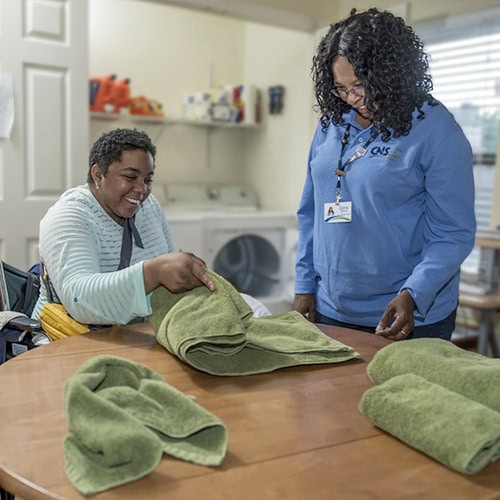
For people in Residential Inpatient Rehabilitation, rehabilitation also continues after they return from the clinic. Neurorehabilitation specialists can reinforce strategies introduced during therapy while people practice activities of daily living, or ADLs, that are necessary for greater independence.
Rehabilitation becomes part of the day rather than something that happens only during an appointment.
One of the strongest arguments for rehabilitation at home is that people should practice skills in the real world, where they will actually use them. CNS agrees. It is a principle known as environmental validity, and it has long been central to the CNS approach to brain injury rehabilitation. Treatment should reflect the environments, responsibilities, distractions and challenges people will encounter in everyday life.
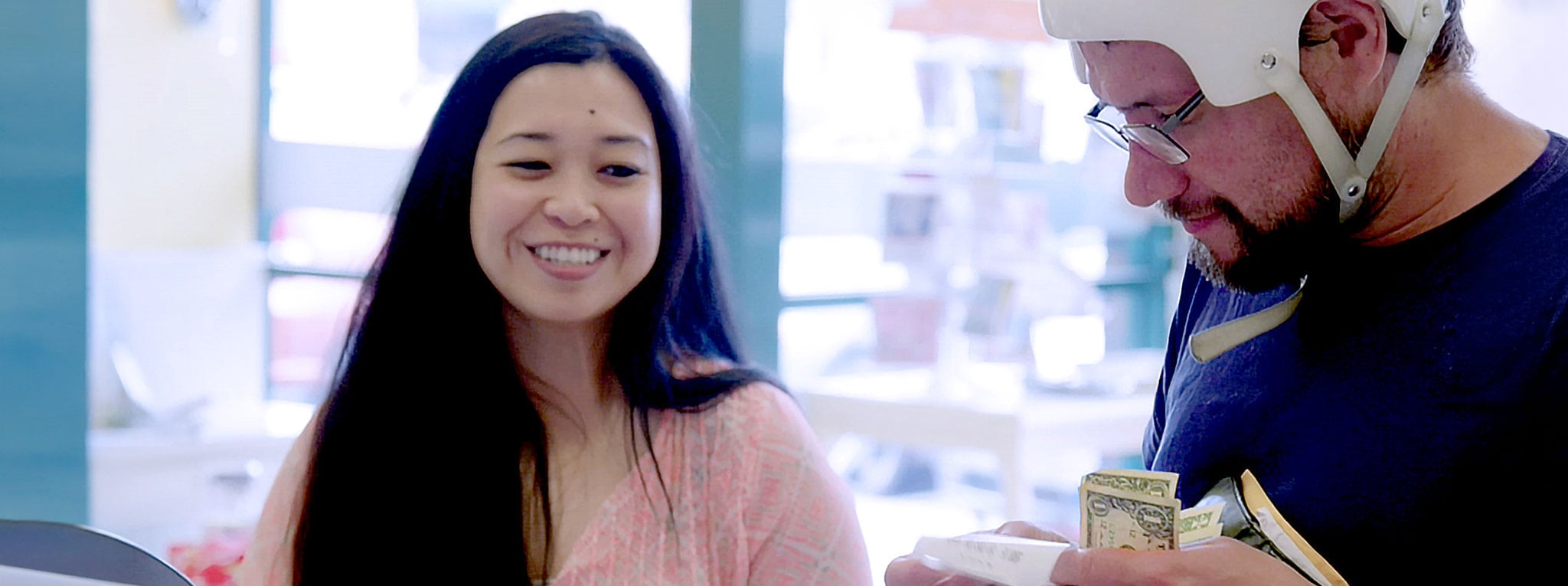
But everyday life extends far beyond someone’s house. People in CNS Residential Inpatient Rehabilitation live in residences located in community neighborhoods, separate from the clinic, giving them opportunities to practice everyday skills where they live before carrying those skills into clinical and community settings. Rehabilitation then extends into clinics and the broader community—grocery stores, restaurants, medical appointments, recreational activities and other settings where people must apply what they have learned under changing circumstances.
A familiar environment may make it easier to perform a task. Rehabilitation must also determine whether that skill transfers when the environment, demands or circumstances change.
Life doesn’t happen only at home. And independence has to travel with the person.
Building independence requires the opportunity to do things independently. That can be difficult at home. When someone struggles, a family member’s natural instinct may be to provide the answer, give a reminder, finish the task or step in before something goes wrong. In rehabilitation, however, the struggle itself can provide important information and an opportunity to learn.
 The dignity of risk means giving people meaningful opportunities to try, make decisions, encounter difficulty and sometimes make mistakes while the appropriate safeguards are in place.
A clinician or trained staff member can observe how a person approaches a task, where it begins to break down, whether the person recognizes the problem, what strategies they use and how much assistance is necessary. As abilities improve, that support can be adjusted.
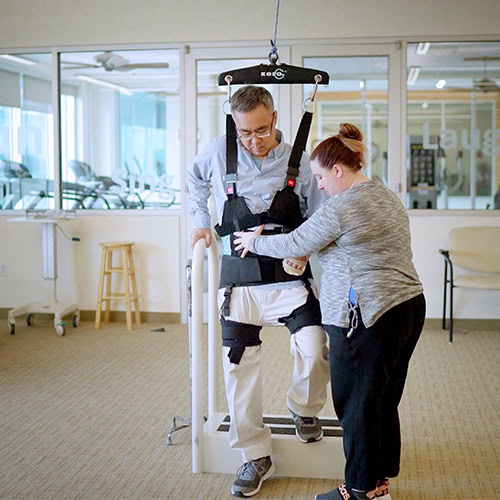
CNS’s ZeroG® Gait and Balance System offers a physical example of the same philosophy. A person relearning to walk may lose their balance. The ZeroG protects them from the full consequence of a fall while still allowing them to experience the loss of balance, respond and work toward regaining control.
The principle extends far beyond walking. Real-world rehabilitation isn’t simply putting someone in a real environment. It’s creating meaningful opportunities to navigate real challenges with the right level of support.
 Brain injury doesn’t organize itself around therapy appointments. A person may perform a task successfully with a therapist and struggle to initiate the same task later without prompting. Fatigue may affect judgment, communication or behavior as the day progresses. A strategy that works in a quiet treatment room may be much harder to use when distractions are present.
For people in CNS Residential Inpatient Rehabilitation, trained staff can observe and document functioning outside formal treatment sessions while reinforcing strategies established by the clinical team. Independent living skills can also be tracked over time, helping the team understand where a person is becoming more independent and where support is still needed.
That information gives the interdisciplinary team a fuller picture of how the person is actually functioning—not only how they perform during a scheduled therapy session.
Leaving the hospital is an important milestone, but discharge from acute care does not mean every medical concern related to a brain injury has resolved.
This can be particularly important after stroke. The American Heart Association reports that the risk of another stroke is about 8% during the first year following an ischemic stroke and remains elevated afterward. Ongoing care after stroke therefore includes not only rehabilitation, but management of risk factors and other potential complications. People may also be adjusting to new medications or managing fall risk and other medical concerns while simultaneously working toward greater independence.
The appropriate level of medical support will vary by individual. CNS programs provide medical and nursing resources based on the individual’s level of care. For people in Residential Inpatient Rehabilitation, that can include ongoing monitoring of medication effects, fall and reinjury risks, and other health concerns that can arise during rehabilitation.
For some people, those needs simply exceed what can safely or reasonably be provided through home-based services. Being medically stable enough to leave acute care and having reached the point where a comprehensive rehabilitation environment no longer offers additional benefit are not the same threshold.
Walking, balance and strength are highly visible parts of recovery. Brain injury can also change the way a person thinks, communicates, behaves, learns, solves problems and interacts with other people. Comprehensive rehabilitation allows those needs to be addressed together.
Physical therapy may address mobility, balance and strength, while occupational therapy focuses on the skills needed for greater independence in everyday activities. Speech-language pathology can address communication and swallowing. Cognitive rehabilitation can target memory, attention, problem-solving and other thinking skills. Educational therapy can help people relearn skills such as reading, writing and math. Behavioral treatment can address changes in initiation, judgment, emotional regulation and social behavior.
For someone preparing to return to work, school or other meaningful roles, rehabilitation can become even more individualized. The skills being rebuilt should reflect the life they are working toward, not simply a standard set of exercises or clinical goals. The objective isn’t improvement within isolated disciplines. It is helping those gains come together in everyday life.
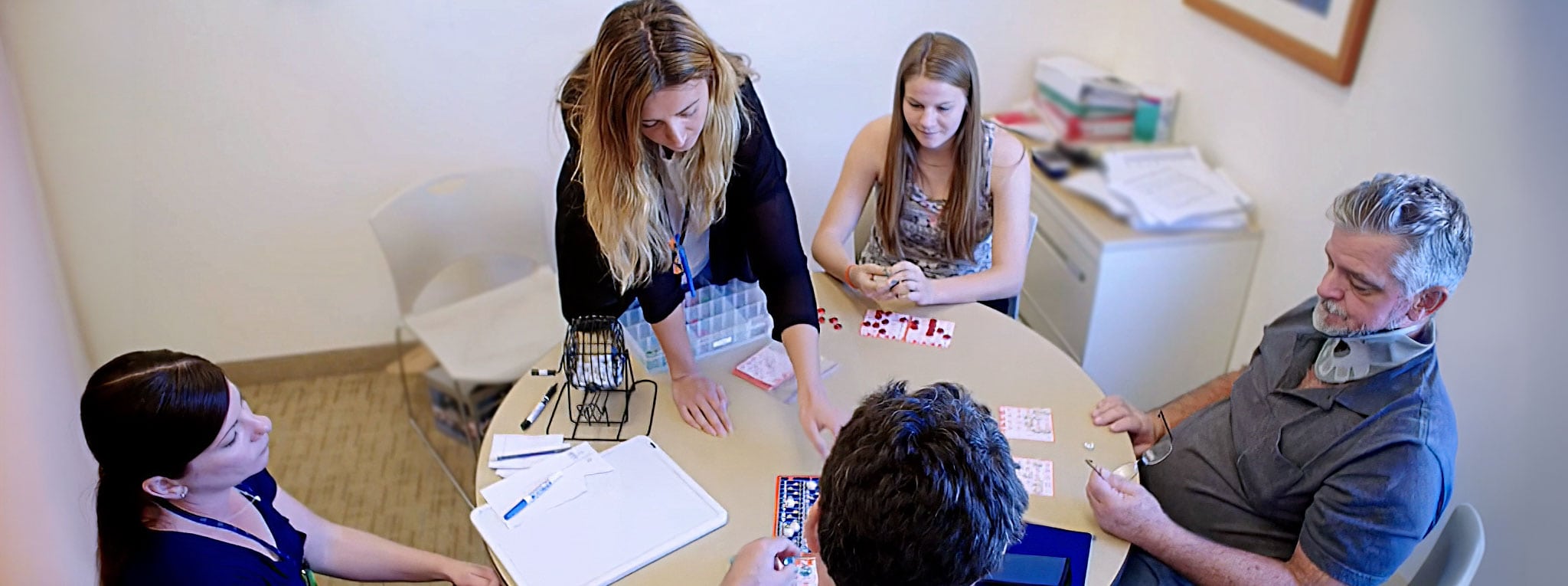
Recovery from brain injury can be isolating, particularly when changes in communication, cognition or behavior make social situations more difficult. In a comprehensive rehabilitation setting, people have regular opportunities to interact with others who are navigating many of the same challenges.
At CNS, group therapy and everyday interaction with other people provide opportunities to practice communication, social skills, problem-solving and appropriate behavior in ways that one-on-one treatment alone cannot replicate. People navigate different personalities, respond to social cues, solve problems with others and build relationships, while clinicians can address challenges as they arise.
There is also value in simply being around people who understand the rehabilitation experience. The relationships they develop can provide encouragement, connection and a sense of belonging during a period when life may feel very different than it did before their injury.
Going home can sound like the simplest next step after hospitalization or rehabilitation. Families may not immediately realize what that decision can require.
A loved one may need help managing medications, meals, mobility and transportation, along with changes in behavior, judgment, initiation or sleep. Families may also find themselves responsible for very personal activities such as bathing, grooming, dressing and toileting.
These activities of daily living are an important part of CNS rehabilitation. In the residential program, people can practice them with trained staff while their level of independence is observed and measured through CNS’s Independent Living Scale. Strategies learned in therapy can be reinforced where people live, with the goal of gradually reducing the assistance they require.Independent Living Scale
Family involvement is important to rehabilitation. Family involvement and family responsibility aren’t the same thing.
A comprehensive program can prepare family members for the person’s return home without requiring them to become the rehabilitation team themselves. They can be involved in recovery while still being spouses, parents, children and siblings.
Successful rehabilitation is not measured simply by whether someone can leave a facility. What matters is the life they are able to build afterward. Greater independence means applying skills throughout the day and across environments: managing responsibilities, participating in the community, maintaining relationships, making safer decisions, adapting when circumstances change and, when possible, returning to school, work and other meaningful roles.
Building that independence means taking what is learned in therapy and being able to use it throughout the day, in different environments and when circumstances don't go exactly as planned. A comprehensive rehabilitation environment gives people repeated opportunities to do that while gradually reducing the support they need.
The goal isn’t to function only in the environment you already know. The goal is to rebuild the skills to function independently wherever life takes you.
Home care can bring therapy into the home. CNS creates an environment in which rehabilitation extends throughout the person’s day.


CNS Monthly Newsletter
The latest CNS updates, including events, company information, and patient care developments
The Inside View
Quarterly magazine focused on brain injury research, rehabilitation, and advancements shaping the field
Sign-up for one or both to stay connected with brain injury news and recover