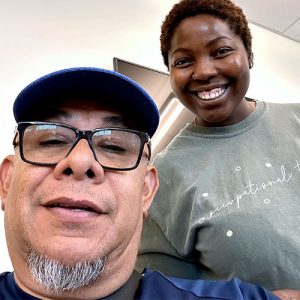
 Before his stroke, 53-year-old Onel Vazquez lived a busy life in Dallas, Texas working full-time as a crane controller to provide for his family. Although Onel knew he had high blood pressure, he avoided taking medication and overlooked his doctor’s advice to eat healthier, lose weight, and exercise. He pushed through each day for his family, never imagining how much those habits would impact his health.
On January 22, 2025, Onel was struck by an intense headache while working at a rural job site. “It was so strong, I knew it was not normal,” he remembered. Onel knew the stroke warning signs, which helped him react quickly. He called 911 himself and turned on his phone location so first responders could find him. As paramedics arrived, he began slurring his words and losing balance. When asked if he wanted to give his wife a message, he managed to say, “Just tell her that I love her,” before losing consciousness.
When Onel woke up at Baylor Scott and White Medical Center, his son was at his bedside. “Everything is up to you,” his son said. “You are going to get better and get well.”
On February 14, Onel transferred to Methodist Rehabilitation Hospital and began therapy the next morning. He arrived in a wheelchair and faced significant weakness and communication difficulties. It was there that his wife learned about Centre for Neuro Skills (CNS) for post-acute rehabilitation. Onel was admitted to CNS’ Day Treatment program in Irving, Texas on March 25.
At CNS, Onel arrived each morning ready to work. Motivated by his family and inspired by other patients around him, he pushed himself from the very beginning. With the support and guidance of his physical therapists, Onel progressed from needing a wheelchair to using a cane, and eventually to walking independently. “I was scared, but now I walk a whole lot better. It is a huge improvement,” he said.
Returning to work was one of his biggest goals. It was important to him financially and emotionally, and CNS tailored his therapy program to achieve this goal. His therapists coordinated directly with his employer and accompanied him to an on-site work readiness assessment. They studied the gravel, uneven terrain, and physical demands of his job and then recreated those real-world scenarios in therapy at the clinic. “I was scared because it felt like starting from zero, but I was happy because I wanted to get back to work,” he said.
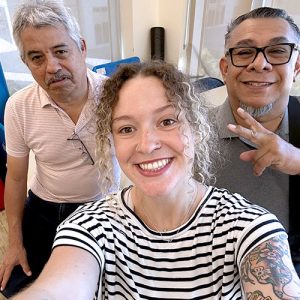 In addition, Onel embraced nutrition education, cognitive exercises, hand eye coordination tasks for driving, and lifestyle changes he had previously avoided. His therapy team, including Jordan, Olivia, and Coco, helped him build new habits that supported long-term health.
On August 11, Onel was discharged from CNS. He returned to work the next month.
Today, Onel pays close attention to what he eats and stays active. In December he took a vacation to Mexico, a milestone that felt impossible earlier in his recovery. “I have to take care of myself so I can take care of my family,” he said. “They were there for me during the stroke, so it is the least I can do for them.”
On January 22, 2026, exactly one year after his stroke, his family gathered to celebrate his recovery. For Onel, the milestone was not only about surviving a stroke. It marked the beginning of a healthier, more intentional life built for the people he loves most.


CNS Monthly Newsletter
The latest CNS updates, including events, company information, and patient care developments
The Inside View
Quarterly magazine focused on brain injury research, rehabilitation, and advancements shaping the field
Sign-up for one or both to stay connected with brain injury news and recover